AI & Machine Learning: From Hype to Healthcare Infrastructure
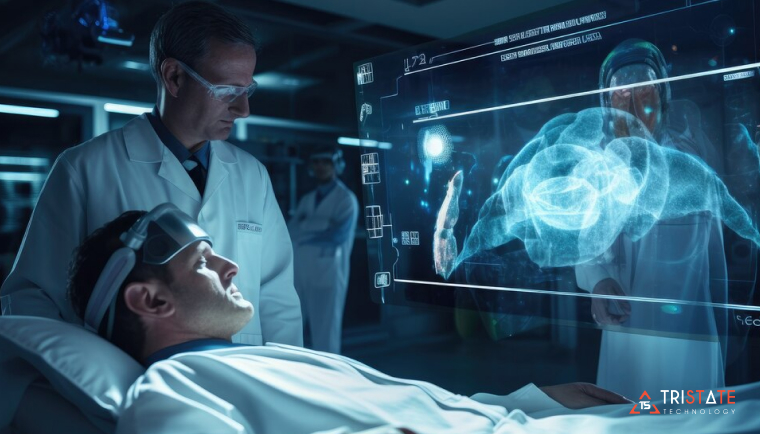
47% of our network believe AI & Machine Learning will have the biggest impact on healthcare over the next decade.
When we asked our network which technology will have the biggest impact on healthcare over the next decade, almost half selected AI & Machine Learning, comfortably ahead of wearables, precision medicine and digital health platforms.
It's a result that reflects a much wider shift taking place across the industry - artificial intelligence is no longer being viewed as a future opportunity. Instead, it is becoming embedded across almost every stage of the healthcare ecosystem, from identifying novel drug targets and designing clinical trials, to supporting diagnostics, medical imaging and hospital workflows. Perhaps most importantly, the conversation has evolved. Organisations are no longer asking whether to adopt AI, but where it can deliver the greatest clinical and commercial value.
Recent developments demonstrate just how quickly the landscape is changing. In June, the UK's Medicines and Healthcare products Regulatory Agency (MHRA) announced a first-of-its-kind AI Sandbox designed to accelerate medicines development and improve patient safety. The initiative will allow developers to work directly with regulators to evaluate AI applications in areas such as drug safety prediction and clinical development, signalling that regulators are now actively encouraging responsible innovation rather than simply responding to it.
The United States is following a similar trajectory. The FDA continues to expand its framework for AI-enabled medical products, with hundreds of AI-powered devices now authorised across specialties including radiology, cardiology and pathology. More recently, the agency has begun dentifying medical devices incorporating foundation models and large language models, recognising that these technologies are becoming an increasingly important part of clinical care.
What's particularly interesting is that AI is creating opportunities across every corner of life sciences. Drug discovery platforms are dramatically reducing the time required to identify promising therapeutic candidates. Diagnostic companies are using machine learning to improve image interpretation and disease detection. Healthcare providers are implementing AI to reduce administrative burden, allowing clinicians to spend more time with patients, while pharmaceutical companies are investing heavily in AI-driven research platforms that combine genomic, imaging and real-world data to generate new biological insights.
Of course, excitement alone won't define the next decade. The organisations that succeed will be those able to balance innovation with evidence, regulatory compliance and clinical validation. As AI becomes increasingly integrated into healthcare, trust will be just as important as technological capability.
Our poll suggests the industry already recognises where the momentum lies. The next challenge is turning that momentum into measurable improvements for patients, clinicians and the wider healthcare system.
.png)
.png)

.jpeg)
